

Building a Culture That CQC Recognises as Outstanding
Achieving an Outstanding rating for Well-Led is about much more than having the right policies, procedures and management systems in place. CQC looks at the culture of a service: whether staff understand its values, feel supported and recognised, learn from good practice and are genuinely engaged in delivering high-quality care.
But how do you turn those principles into something that happens every day?
We recently had a fantastic opportunity to see this in practice when one of the care providers using The Care Handbook achieved Outstanding for Well-Led in its latest CQC assessment.
What made the result particularly exciting for us was that CQC specifically referenced the provider’s use of The Care Handbook when describing how it supports its values and recognises good practice.
It provides a great real-world example of how the everyday things a provider does to engage, develop and recognise its staff can contribute to a strong Well-Led culture.
What Did CQC Find?
In its latest assessment of Blue Ribbon Community Care (Tyne and Wear), CQC rated the service Outstanding for Well-Led.
Within the Shared Direction and Culture quality statement, CQC highlighted a number of ways the provider involved and recognised its staff – including its use of The Care Handbook.
CQC reported:
“The service used a web-based Staff Handbook app to support its values and recognise good practice.”
The assessment went on to explain that staff could confidentially recommend colleagues who had provided exceptional care. Examples could then be shared with the wider team as best practice, while staff received points that could be exchanged for rewards.
This is important because it demonstrates something that can easily be missed when thinking about CQC compliance: culture needs to be visible in everyday practice.
Having a set of company values isn’t enough on its own. Those values need to influence how people work, how good practice is recognised and shared, and how staff feel about being part of the organisation.
In this case, CQC was able to see evidence of those principles being put into practice.
What Can Other Care Providers Learn From This?
An Outstanding Well-Led culture isn’t created by one initiative or piece of technology. It develops when an organisation’s values are reflected in the everyday experience of its staff and the people they support.
There are several useful lessons from the CQC assessment.
Make Your Values Part of Everyday Practice
Most care providers have a set of organisational values, but there can be a significant difference between having values and actually living them.
Values introduced during induction shouldn’t then disappear into an employee handbook. They should continue to influence conversations, learning, recognition and the way good care is celebrated.
When staff can see practical examples of colleagues demonstrating those values, they become much more meaningful.
Recognise Good Care
Care workers spend much of their working day supporting people independently in their own homes. As a result, some of the best examples of compassionate, thoughtful or exceptional care may never be seen by a manager.
Creating opportunities for colleagues to recognise each other helps bring those examples to the surface.
Recognition doesn’t always need to come from management either. Peer-to-peer recognition can be particularly powerful because it shows that good practice is noticed and valued by the people working alongside you.
Turn Good Practice Into Shared Learning
Recognising excellent care is valuable, but sharing it can make that recognition even more useful.
A real example from one care worker can become an opportunity for the whole workforce to learn.
Instead of simply telling staff what good practice should look like, providers can show them examples of what their own colleagues are already doing well.
That helps create a culture where learning isn’t restricted to formal training courses – it becomes part of everyday working life.
Turning These Principles Into Everyday Practice
The challenge for care providers is often not knowing what a good culture looks like, but finding practical ways to make it part of everyday working life.
This is particularly difficult in domiciliary care, where staff are working across different locations and may have relatively little face-to-face contact with managers or colleagues.
That was one of the reasons we developed The Care Handbook.
Rather than creating another system that staff only visit when they need to complete mandatory training or find a policy, we wanted the Handbook to become part of the employee’s ongoing experience with the organisation.
Providers can use the Handbook to reinforce their values, share learning and good practice, communicate with their workforce and recognise individual achievements.
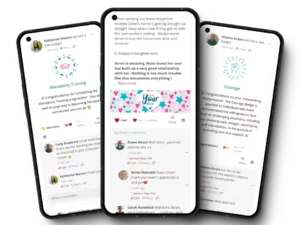
Features such as Values Shout Outs allow staff to recognise colleagues who have demonstrated the organisation’s values through the care they provide. Those examples can then be shared with the wider team, turning recognition into an opportunity for learning.
Learning and development can continue beyond formal courses through reflective practice, workplace activities and ongoing engagement, while achievements and rewards give providers another way to recognise participation and progress.
The aim isn’t to create an Outstanding culture through technology.
It’s to give care providers practical tools that help them build, demonstrate and maintain the behaviours that underpin a strong Well-Led culture – every day, across the whole workforce.
Making Your Well-Led Culture Visible to CQC
One of the challenges with organisational culture is that it can be difficult to demonstrate.
A provider might have a supportive management team, engaged care workers and strong organisational values – but during an assessment, CQC needs to understand how that culture actually works in practice.
This is where everyday evidence becomes important.
If staff regularly recognise colleagues for demonstrating organisational values, participate in reflective learning, share examples of good practice and engage with learning and development, those activities help create a picture of how the organisation operates.
Rather than simply telling an assessor “our staff understand our values”, a provider can demonstrate how those values are reinforced and recognised throughout the organisation.
The same applies to learning and staff development. Training records can show that somebody completed a course, but they don’t necessarily demonstrate how that learning has influenced their practice.
Reflective learning, workplace activities and examples of good practice can provide a much richer picture of how learning continues beyond the completion of mandatory training.
Most importantly, this evidence should exist because these things genuinely happen within the service – not because an inspection is approaching.
When engagement, recognition and learning are embedded into everyday practice, demonstrating your culture to CQC becomes much easier because the evidence is already there.
Final Thoughts
There is no single formula for achieving an Outstanding Well-Led rating. Every care service is different, and ultimately an Outstanding culture is created by its people, its leadership and the quality of care they provide.
What this CQC assessment demonstrates is the importance of making your values more than words on a page.
When staff understand those values, see them reflected in everyday practice, recognise them in their colleagues and have opportunities to share and learn from good care, they become part of the culture of the organisation.
We are incredibly proud to see The Care Handbook recognised by CQC within the assessment of an Outstanding Well-Led service. More importantly, we’re delighted to see the platform being used in exactly the way it was designed – helping care providers bring together their people, values, learning and recognition.
The Care Handbook won’t create an Outstanding service – your people do that.
But it can give them a place to learn, reflect, share, recognise and celebrate the great care that’s already happening.